

The best solar hot water system depends on your roof strength, climate, and budget. There is no single right answer for every home.
Split pump systems, where the storage tank sits on the ground rather than the roof, are ideal for homes that cannot handle extra roof weight. Close-coupled thermosiphon systems suit homeowners who want to keep the ground-level footprint minimal. For maximum efficiency in cooler or cloudier conditions, evacuated tube collectors outperform flat plates. In warm climates like Perth, flat plate collectors perform exceptionally well.
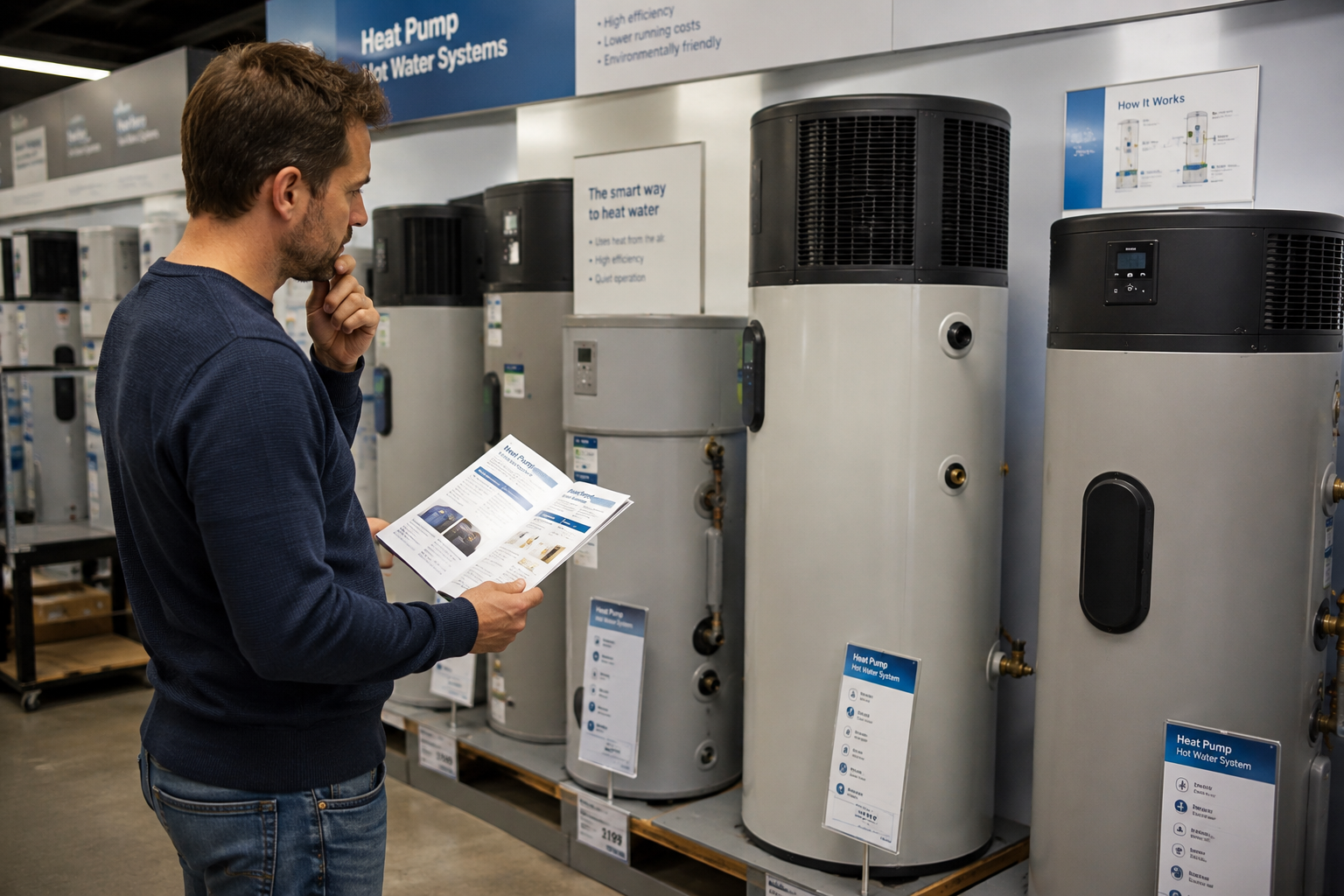
Heat pump hot water systems are now widely regarded as a highly efficient modern alternative, particularly for homes that already have rooftop solar.
Installation typically ranges from $4,000 to $8,000, and government rebates are available to reduce upfront costs.
The Four Main Types of Solar Hot Water Systems
Understanding the main system types is the essential first step. Here is how each one works and which homes each suits best.
Heat Pump Hot Water Systems
A heat pump hot water system is not a traditional solar collector system. Instead of roof-mounted panels, a heat pump unit extracts heat from the surrounding ambient air and uses it to heat the water in the storage tank.
The process works similarly to a reverse-cycle air conditioner operating in reverse. Because the system moves heat rather than generating it, heat pumps use up to 75% less electricity than a standard electric hot water system or a traditional gas hot water system.
Heat pump systems operate effectively on cloudy days and in colder weather, making them one of the most reliable options for a consistent hot water supply across any modern gas system or electric setup.
They are particularly cost-effective when paired with an existing rooftop solar PV system. Running the heat pump unit during the day on excess solar generation can cover most or all of its electricity use, dramatically reducing your power bills.
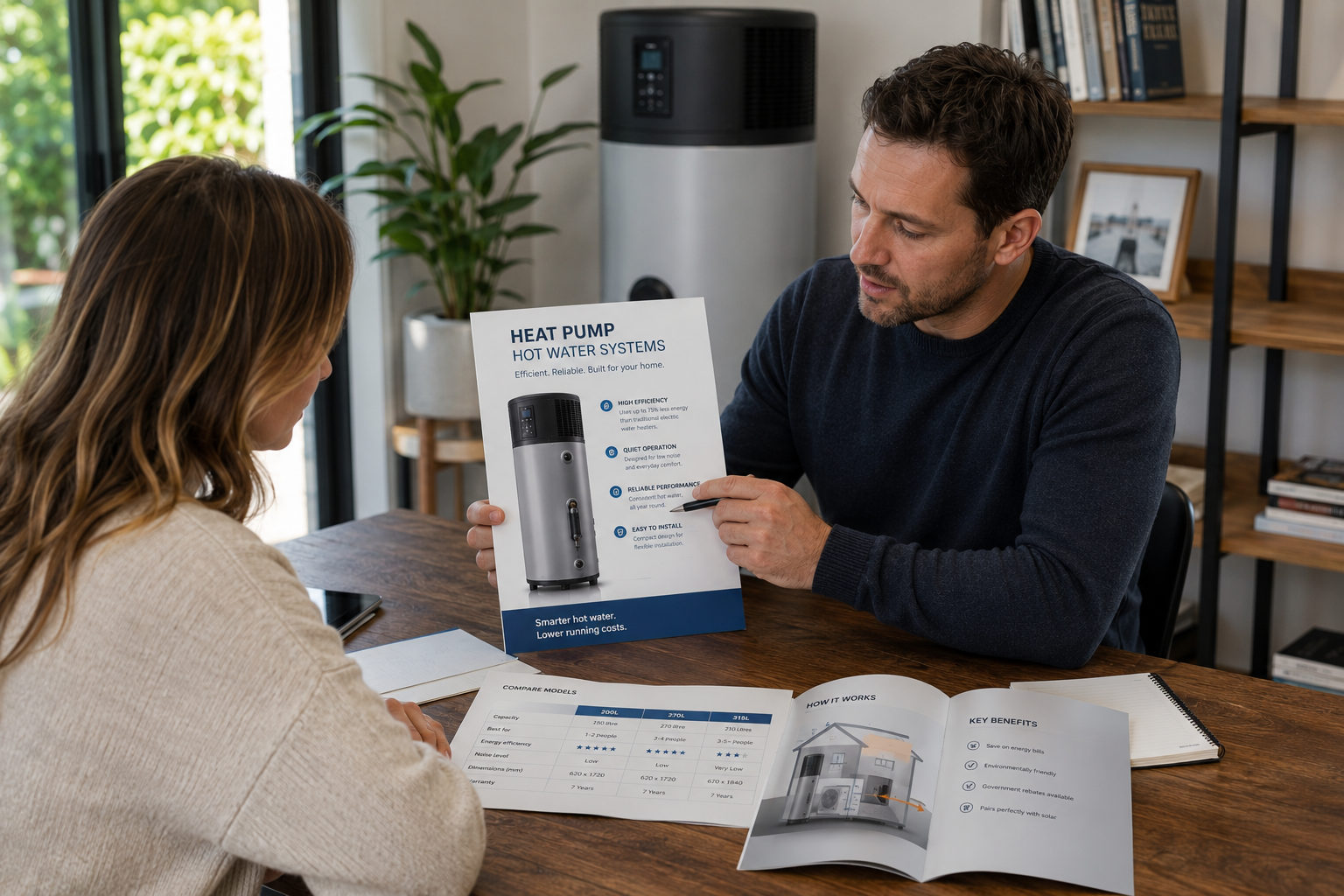
Solar Repairs installs Eurosun heat pump systems in Perth, available in 200L and 270L storage options, both backed by a 6-year warranty.
Best for: homes with high energy bills, existing solar PV, or limited usable roof space for collectors.
Close-Coupled (Thermosiphon) Systems
Close-coupled systems mount both the solar collectors and the insulated storage tank together on the roof as a single unit.
They work via natural convection. As the sun heats the water in the collectors, the warmer water rises into the tank above while cooler water drops back down to be heated again. No pump is required.
This passive design means fewer moving parts and less maintenance over the life of the system.
Close-coupled systems are well-suited to warm, sunny climates like Perth, where flat plate collectors absorb heat effectively year-round. The main consideration is roof strength. A tank full of water can weigh 300kg or more, so your roof needs to be structurally sound before committing to this configuration.
Best for: budget-conscious buyers with a strong, north-facing roof in a warm climate.
Split Systems (Ground-Mounted Tank)
Split systems separate the collectors from the hot water tank. The solar hot water panels go on the roof, while the insulated storage tank sits on the ground.
A small circulation pump moves the heated water from the roof down to the ground-level tank and returns cold water back up to the collectors.
Keeping the heavy tank on the ground removes the structural load from the roof, which makes split systems the preferred option for most modern Perth homes. The ground-level tank is also straightforward to access for servicing.
Split systems offer a cleaner roofline compared to close-coupled units, with only the slim collectors visible from the street.
Best for: most residential homes. Flexible, efficient, and suited to a wide range of roof types.
Evacuated Tube Systems
Evacuated tube systems use vacuum-sealed glass tubes to trap and retain solar heat more effectively than standard flat plate collectors.
Each tube works like a thermos: the vacuum inside prevents heat from escaping, which allows the system to reach and maintain higher water temperatures even when ambient air temperatures are low. This makes evacuated tubes significantly more effective in cold weather, overcast conditions, or frost-prone areas.
In Perth’s warm, sunny climate, the efficiency advantage of evacuated tubes over flat plates is less pronounced than in cooler southern states. For most Perth homeowners, flat plate collectors deliver excellent performance at a lower cost. Evacuated tubes are better suited to WA homes in less sunny regions, or for those who want maximum solar generation regardless of season.
Best for: maximum efficiency seekers and homes in cooler or less sunny locations.
Which System Best Suits Your Home?
Perth homeowners have more options than a national buyer’s guide will typically suggest.
Here is a straightforward breakdown based on your situation:
- Best overall for most Perth homes: Split system (electric or gas boosted). Flexible placement, lower roof weight, and suited to a wide range of roof types. The most common choice Solar Repairs installs across the Perth metropolitan area.
- Best for maximum efficiency: Evacuated tube system. Ideal for homes in cooler WA regions or where cloud cover is more frequent. Offers a meaningful efficiency advantage in conditions where flat plate collectors underperform.
- Best for budget buyers in warm climates: Close-coupled thermosiphon flat plate. Simple, durable, and generally the lower-cost option upfront. Perth’s climate means flat plates deliver strong performance year-round.
- Best for high-energy bills or solar PV households: Heat pump system. The most energy-efficient option available, and particularly effective when run off excess daytime solar generation. No roof collectors required.
A note on Perth’s climate: with more sunny days per year than any other Australian capital city, flat plate collectors perform exceptionally well here.
The efficiency premium that evacuated tubes offer in cooler southern states is less significant in a Perth context.
For most local homes, flat plates are the cost-effective default.
Key Factors to Consider Before You Choose
Beyond system type, a few practical factors will shape which option is right for your home.
Tank Size
A 300 to 360L tank is the standard recommendation for a household of four people.
As a general guide, allow approximately 50L of storage capacity per person per day. Getting the tank size wrong in either direction creates problems: too small and you will rely on the booster more often, increasing running costs; too large and you are paying to heat water you never use.
The right tank size paired with the right system type is what delivers genuine long-term savings on water heating costs.
Electric or Gas Booster
Every solar hot water system requires a booster to maintain the supply during extended cloudy periods or periods of high demand.
Electric boosters work particularly well for homes with a rooftop solar water heater or solar PV system. When your solar panels are generating more electricity than your home is using, that excess solar generation can cover the booster’s electricity use, effectively giving you free hot water on clear days.
Gas boosters heat water faster and may suit households with an existing gas connection. However, Perth homes moving away from gas are increasingly choosing electric-boosted systems paired with rooftop solar, which reduces dependence on gas and lowers ongoing energy bills.
There is no universally better option: the right booster type depends on your home’s existing energy setup and your long-term plans.
Roof Strength and Orientation
Solar collectors should face north to maximise sun exposure in Australia.
If you are considering a close-coupled thermosiphon system, your roof must be structurally capable of carrying the combined weight of the full tank and water, which can exceed 300kg. A structural assessment may be required before installation.
Split systems remove this concern entirely by keeping the heavy storage tank on the ground.
If your roof is heavily shaded, faces the wrong direction, or has limited usable space for collectors, a heat pump hot water system may be the most practical solution.
Heat pumps require no roof collectors at all and can be installed almost anywhere with adequate airflow.
Still Need Help Deciding? Contact Solar Repairs Today!
Choosing the right solar hot water system comes down to your home’s layout, energy usage, roof suitability, and long-term budget goals.
Whether you are considering a split system, heat pump, evacuated tubes, or a traditional flat plate setup, our team at Solar Repairs can help you find the most practical and energy-efficient solution for your Perth home.
Get in touch with us today!
