

Solar Battery Rebates
WA Solar Battery Rebate: What You Can Get in 2026
Two separate schemes can cut the cost of a home battery in Western Australia, and they stack. Here is what each one is worth, what it requires, and what changed on 1 May 2026.
- Electrical Licence EC8323
- CEC Approved Solar Retailer
- Accredited Installer SW7097859
- Fully Insured
- 5-Year Workmanship Warranty
- Established 1997
Overview
Two rebates, and they stack
A Perth household putting in a battery can use the federal Cheaper Home Batteries Program and the WA Residential Battery Scheme together. The federal side is the larger of the two and works as a percentage of the installed cost. The state side is a flat amount, with a no-interest loan behind it. Both come with conditions that decide whether a quote actually qualifies.
Figures on this page were taken from the Clean Energy Regulator and Energy Policy WA on 1 August 2026. Both schemes change, and the federal rates step down every year, so check the source pages linked below before you commit to anything.
| WA Residential Battery Scheme | Cheaper Home Batteries Program | |
|---|---|---|
| Run by | WA Government, administered by Plenti | Australian Government, administered by the Clean Energy Regulator |
| What you get | Up to $1,300 (Synergy) or $3,800 (Horizon Power) | Around 30% off the upfront cost |
| Based on | Usable capacity, capped at the 10 kWh amount | Usable capacity, in bands, up to 50 kWh |
| How you receive it | Your approved vendor applies and it comes off the price | Your installer claims certificates and it comes off the price |
| Loan | No-interest loan up to $10,000 for households earning under $210,000 | None |
| VPP | You must join one | The battery must be able to join one |
Scheme details checked against Energy Policy WA, Synergy and the federal energy department on 12 September 2026.
Federal
Cheaper Home Batteries Program
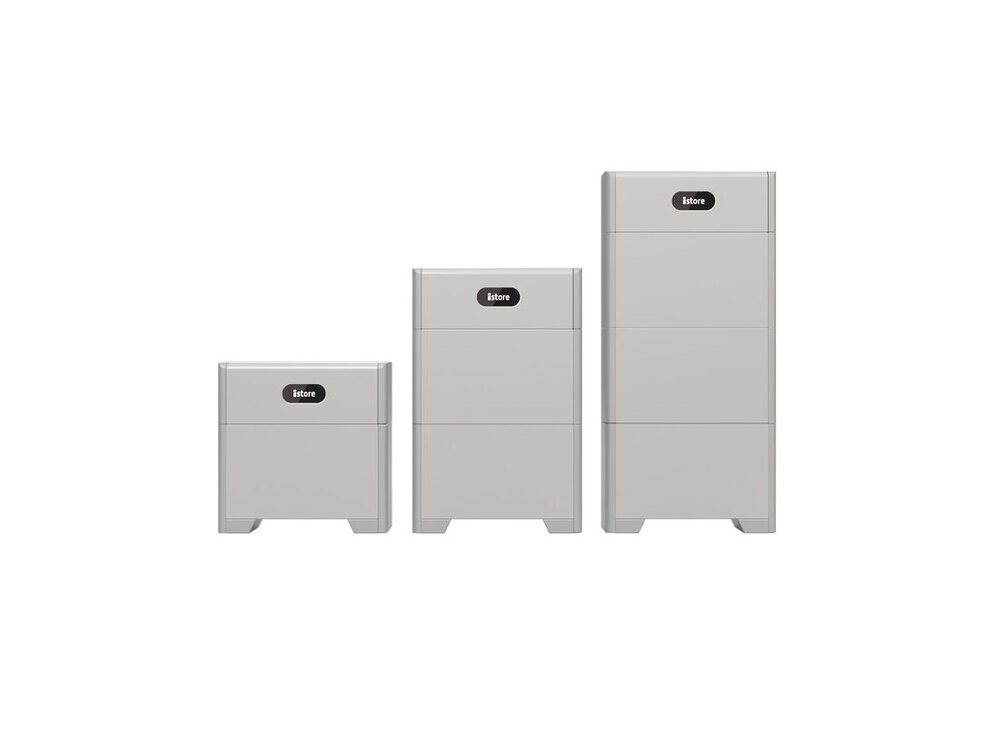
The Clean Energy Regulator sets the discount rate so that it “equates to around a 30% discount on the upfront cost of installing solar batteries”. It is delivered through small-scale technology certificates, which your installer claims and passes on, so it shows up as a reduction on the quote rather than as money paid back to you.
- The battery must be between 5 and 100 kWh nominal capacity
- Certificates can only be claimed on the first 50 kWh of usable capacity
- It must be installed with an existing or new rooftop solar system
- It must be technically capable of joining a virtual power plant
- It must be installed by an installer accredited by Solar Accreditation Australia with battery endorsement
Changed 1 May 2026
Why a bigger battery no longer means a bigger rebate
Until May 2026 the certificate factor applied evenly across the whole battery. It now tapers by band of usable capacity, so the value of each additional kilowatt hour drops sharply as the system gets bigger.
| Usable capacity | Certificate factor applied |
|---|---|
| 0 kWh up to 14 kWh | 100% |
| above 14 kWh up to 28 kWh | 60% |
| above 28 kWh up to 50 kWh | 15% |
| above 50 kWh | no certificates |
The factor itself also steps down each year through to 2030 as battery prices fall, and the scheme is reviewed at least annually. Source: Clean Energy Regulator and DCCEEW.
Western Australia
WA Residential Battery Scheme
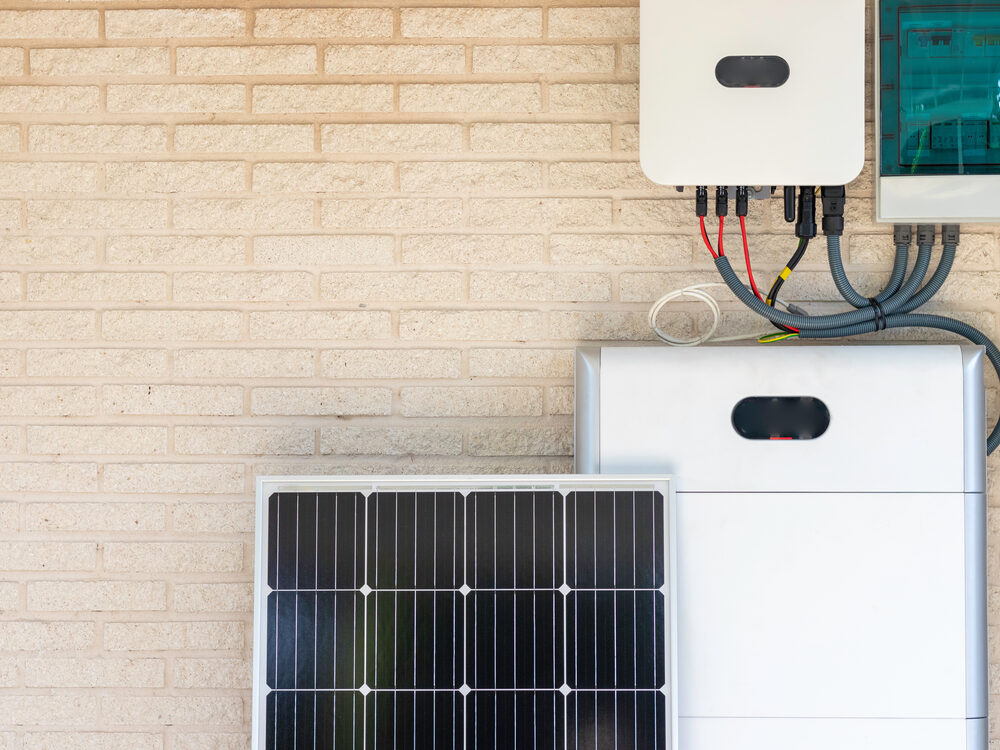
The state rebate depends on who supplies your electricity. Energy Policy WA lists $1,300 for Synergy customers and $3,800 for Horizon Power customers. The maximum is based on 10 kWh of capacity, so a larger battery is eligible for the same maximum amount rather than a proportionally larger rebate.
Behind the rebate there is a no-interest loan of up to $10,000, repayable over up to 10 years, for households with a combined annual income of less than $210,000.
- The battery must be a new, VPP-capable unit from the approved lists
- You must commit to a virtual power plant product offered by your retailer
- Installation must be by an accredited installer from the Plenti Vendor Directory
- Applications are open, with the scheme currently expected to be available until 2027
Source: Energy Policy WA.
How to claim
Are you eligible, and how do you claim?
Under Energy Policy WA’s criteria, you need to:
- be an Australian permanent resident and a Synergy or Horizon Power customer
- install a new, replacement or additional battery with at least 5 kWh of usable capacity, on or after 1 July 2025 (batteries installed before then don’t qualify)
- choose a battery that’s on the approved list and meets Synergy’s or Horizon Power’s technical standards; for Synergy customers, that means a battery on Synergy’s Supported Solutions List
- use an approved vendor from the Plenti vendor directory
- sign up to a virtual power plant (VPP) product with your retailer
- have the system installed to Western Power’s or Horizon Power’s connection requirements
For the federal discount, the battery also has to be installed with an existing or new rooftop solar system, and the installer has to be accredited by Solar Accreditation Australia with a battery endorsement.
One more rule changed on 1 May 2026. New and upgraded solar and battery systems on the South West Interconnected System now have to meet Western Power’s new minimum technical standards, on top of the scheme’s own conditions. A good installer builds this into the quote, but it’s worth asking.
Step by step
- Get quotes from installers listed in the Plenti vendor directory, and ask each one to confirm they also hold the Solar Accreditation Australia battery endorsement.
- Pick a battery on Synergy’s Supported Solutions List, or Horizon Power’s equivalent. If it isn’t on the list, it can’t join the VPP and won’t qualify.
- Your vendor applies for the rebate, and the loan if you want it, through Plenti. You don’t apply to the government yourself.
- The application then goes to Synergy and on to Western Power for approval to connect.
- The battery goes in. For rebate installs, your installer also lodges a notice of completion with Building and Energy.
- You join your retailer’s VPP. For Synergy customers, that’s Battery Rewards.
- Check the invoice. Both discounts should appear as separate lines, not described as “included”.
Finance
The no-interest loan
Households with a combined income under $210,000 can borrow up to $10,000 interest-free and repay it over as long as 10 years. The loan isn’t limited to the battery. Energy Policy WA says it can also cover new or upgraded inverters and solar panels, as long as they’re installed with a battery.
That matters on older Perth systems. Plenty of inverters from the early 2010s aren’t battery-ready, so adding storage can mean a new hybrid inverter, and the loan can cover the part of the job the rebates don’t.
We work with green finance providers Plenti and Brighte, and we’ll check what your existing solar, inverter and switchboard can support before you spend anything.
Perth specifics
What a battery is actually worth here
The rebate decides what the battery costs. What it saves depends on Synergy’s buyback rates, and in Perth those are lopsided. Under the Distributed Energy Buyback Scheme, exported electricity earns 10 cents per unit between 3pm and 9pm and 2 cents per unit outside that window, while buying electricity back on the A1 residential tariff costs 32.3719 cents per unit.
That gap is the whole argument for storage. Power your roof sends to the grid at midday earns 2 cents; the same unit bought back at 7pm costs over 32 cents. A battery moves that generation into the evening instead of selling it at the low rate, which is worth considerably more than the export credit it gives up.
Buyback rates from Synergy.
Before you sign
What to check on any quote
Both schemes turn on the installer, not just the battery. The federal discount requires an installer accredited by Solar Accreditation Australia with battery endorsement. The WA rebate requires an installer listed in the Plenti Vendor Directory. Ask to see both before you sign, and ask for the certificate discount to be itemised on the quote rather than described as included.
Solar Repairs is a repair and servicing business. If you already have a battery that is underperforming, or you want an existing solar system assessed before you spend money adding storage to it, that is the work we do. A battery is often blamed for a fault that turns out to sit in the gateway, the isolators or the wiring, and that is a far cheaper thing to put right than a replacement unit.
Get the VPP terms in writing. The scheme page doesn’t say how long you have to stay in the VPP or how often your retailer can draw on your battery, and those two things decide what the battery is worth to you.
Have your existing system checked. An old inverter, a full switchboard or tired DC wiring can add cost after the quote is signed, and it’s cheaper to know before the installer turns up.
FAQs
Common questions
Can I claim the federal discount and the WA rebate on the same battery?
Yes. Energy Policy WA states the state scheme “is in addition to the Federal Government’s Cheaper Home Batteries Program”, and that the battery retailer manages the federal application as well, so both amounts come off the cost of the system.
Do I need solar panels already?
Yes for the federal discount. The Clean Energy Regulator requires that solar batteries be installed with either an existing or a new rooftop solar system. A battery on its own does not qualify.
What is a VPP, and do I have to join one?
A virtual power plant lets your retailer call on your battery to support the grid at peak times. For the federal discount the battery only has to be technically capable of joining one. The WA rebate goes further: you must commit to participating in a VPP offered by your electricity retailer. The length of that commitment is not stated on the scheme page, so ask your retailer to put the term in writing before you sign.
Does a bigger battery get a proportionally bigger discount?
No, not since 1 May 2026. The certificate factor now tapers: the first 14 kWh of usable capacity attracts the full rate, the next band is discounted to 60%, and capacity above 28 kWh only attracts 15%. Nothing beyond 50 kWh of usable capacity earns certificates at all. Oversizing a battery to chase the rebate no longer works the way it did.
Is the rebate paid to me, or taken off the price?
It comes off the price. The discount is delivered through small-scale technology certificates, which the retailer or installer claims and passes on as a reduction in the quoted cost. You should see it itemised on the quote. Ask for it in writing if you cannot see it.
Is the discount going to shrink?
Yes. The certificate factor steps down each year through to 2030 as battery prices fall. The scheme is reviewed at least annually, so the amount available for the same battery is designed to reduce over time.
Does the rebate cover repairing or replacing a battery I already own?
No. These schemes discount the installation of a new eligible battery, not repairs to an existing one. If your current battery is underperforming it is worth having it assessed first, because a fault in the gateway, isolators or wiring is far cheaper to fix than replacing a unit that is actually sound.
Do I apply for the WA battery rebate myself?
No. Your approved vendor applies on your behalf through Plenti, the scheme administrator. That’s why the vendor has to be on Plenti’s directory.
I'm a Horizon Power customer. Is it different?
The rebate is bigger: up to $3,800 instead of $1,300. You still need an approved vendor, a compliant battery and a VPP, run through Horizon Power.
My battery went in before July 2025. Can I claim now?
No. Batteries installed before 1 July 2025 aren’t eligible for the rebate or the loan.
Reviews
What Perth customers say
Not sure your system is ready for a battery?
We will test what your solar is actually producing and tell you what the switchboard and inverter can support, before you spend anything.
Solar Repairs · 15 Delawney Street, Balcatta WA 6021 · 1300 555 274 · Electrical Licence EC8323 · Plumbing Licence PL6817
