

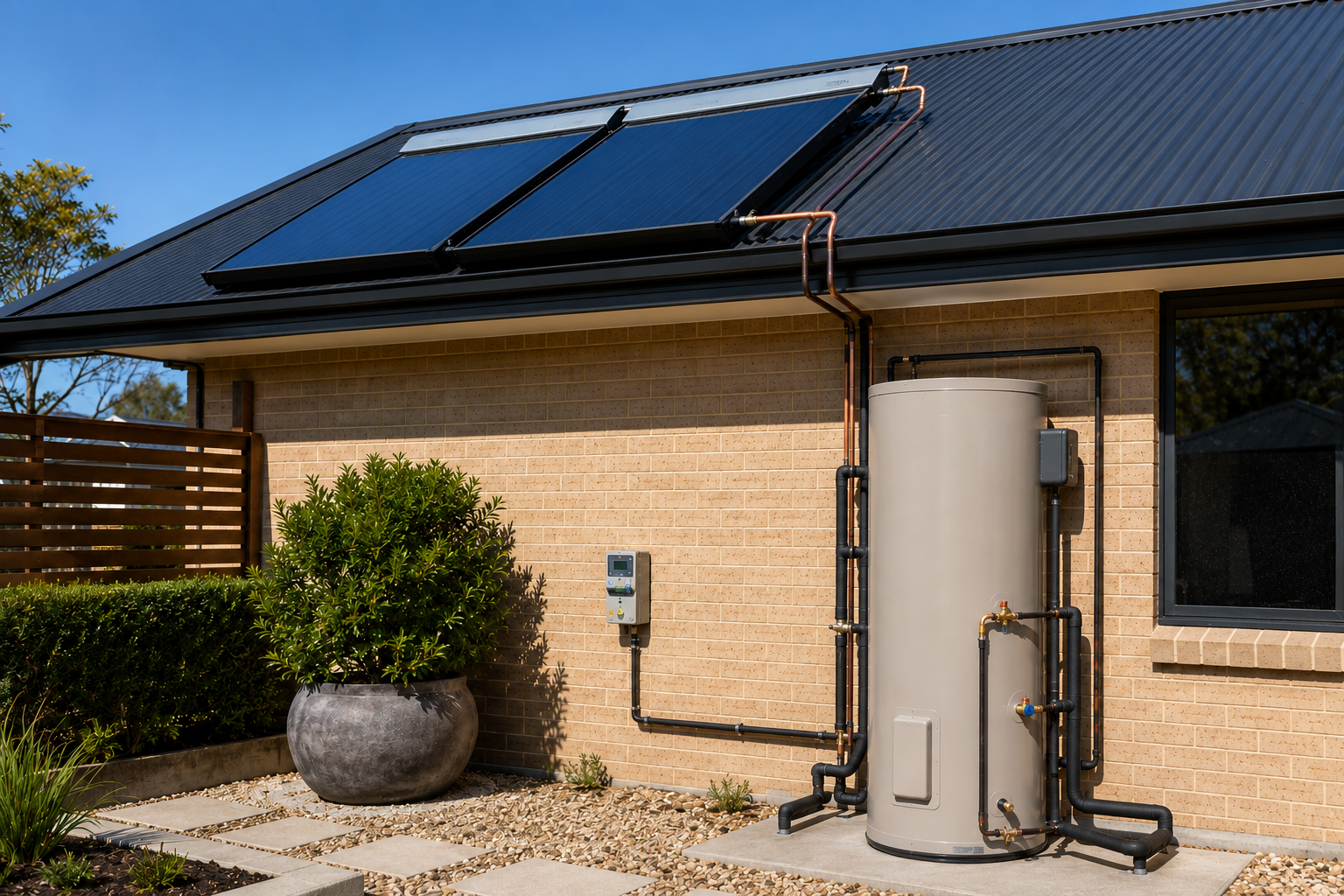
A split solar hot water system features solar collectors mounted on your roof to capture heat, while the heavy water storage tank is installed separately at ground level or inside your home.
A small, energy-efficient pump circulates water or heat-transfer fluid between the roof and the tank.
It is one of the most popular solar hot water designs in Australian homes, and for good reason.
What is a split solar hot water system?
A split system separates the two main parts of a solar hot water heater. The solar collectors sit on the roof to soak up the sun’s energy, while the hot water storage tank sits on the ground rather than up on the roof.
This is different from a close-coupled or integrated unit, where the tank is bolted to the roof directly above the collectors.
Because split systems separate the tank from the collectors, the heavy storage tank never adds load to your roof.
That makes them a smart choice where roof strength, roof space or street appeal matters.
How a Split Solar Hot Water System Works
The system works on a simple, reliable cycle that runs largely on free solar energy.
- Solar collection: Solar panels or evacuated tubes on the roof absorb the sun’s heat, warming the water or heat-transfer fluid passing through them.
- Circulation: A small, intelligent circulation pump moves the heated fluid down to the ground-level tank. A controller switches the pump on and off based on the temperature difference between the collectors and the tank.
- Heating and storage: Heat is transferred into your main water supply, often through a heat exchanger, then stored ready for use.
When there is not enough sunlight, an automated electric or gas booster heats the water. This means you always have hot water during cloudy periods, overnight and through winter.
In effect, the sun does most of the work, and the booster only tops up when needed.
For a closer look at the underlying process, see our guide on how solar hot water works.
Types of Solar Collectors and System Designs
Not all split systems are built the same, so it helps to know the main options. The two common collector types are:
- Flat plate collectors: Flat panels that absorb solar energy across a dark surface. They are robust and cost-effective.
- Evacuated tubes: Rows of glass tubes that trap heat very efficiently, including on cooler days and during low solar gain.
There are also two ways the system can move water:
- Direct system: Household water is pumped directly through the panels to heat it. Best suited to mild climates.
- Indirect system: A closed loop uses a mixture of water and antifreeze, giving freeze protection in frost-prone areas. Heat is then passed to your water through a heat exchanger.
It is worth noting that a heat pump hot water system is a different technology.
Heat pump systems pull warmth from the surrounding air, a bit like a reverse-cycle air conditioner, rather than relying on roof-mounted solar collectors.
Key Benefits of a Split Solar Hot Water System
Split systems combine good looks with practical advantages for most homes.
- Better aesthetics: Split systems offer better aesthetic results with hidden storage tanks, so only the sleek collectors show on your roof.
- No roof reinforcement: Because the tank sits on the ground rather than as a rooftop single unit, it never adds weight up high.
- Flexible placement: The ground tank can go almost anywhere that is suitable, outdoors or inside.
- Better frost protection: Split systems provide better frost protection by placing tanks indoors in colder areas.
- Lower energy bills: Using the sun to heat water delivers genuine energy savings and a smaller carbon footprint.
Unlike solar panels that generate electricity, this kind of solar system uses the sun’s warmth directly to heat your water, which is where the savings come from.
 Installation and What to Expect
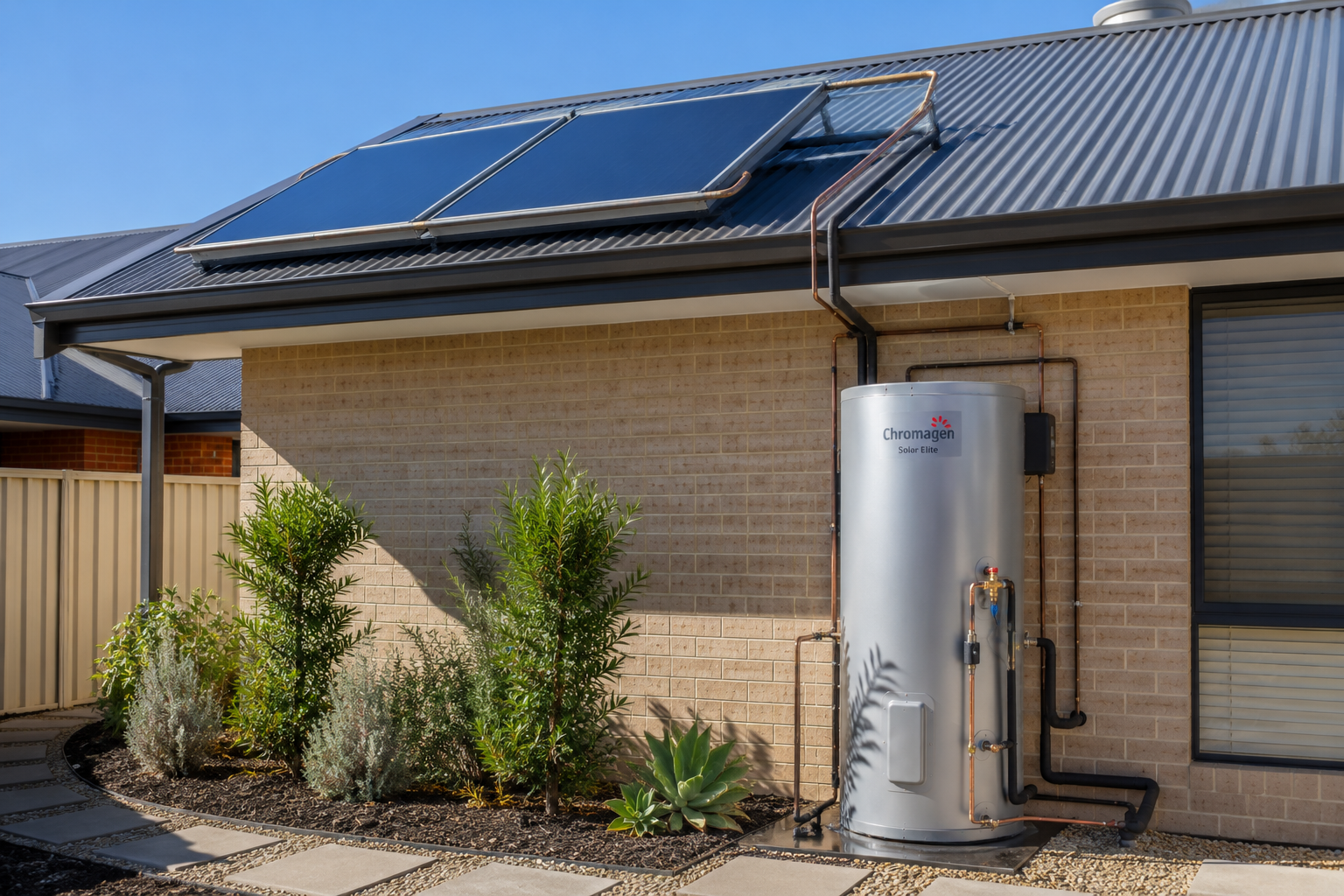
A new hot water system of this type is quick to fit, with installation typically taking 1 to 2 days, depending on your roof and existing plumbing.
A few details keep it safe and efficient:
- Collectors should be mounted facing north at a 20 to 30 degree angle for maximum sun.
- Pipes between the collectors and the tank must be insulated to minimise heat loss.
- Plumbing modifications are often needed to meet local building codes.
- The system includes a controller, booster and tempering valve to manage tank temperature safely.
Getting these details right protects your tank temperature, keeps heat loss low and ensures a compliant, efficient installation.
Lifespan and Maintenance
Split solar hot water systems are built to last and ask very little of you.
A complete system typically lasts 15 to 20 years; the solar collectors can last over 20 years with proper care, and storage tanks usually last 10 to 15 years before replacement.
To protect that lifespan, a little upkeep goes a long way. Book annual inspections for optimal system performance, have the circulation pump checked every 2 to 3 years, and address small faults early before they affect your hot water.
You will find more practical advice in our solar tips and guides.
Regular solar hot water servicing and repairs keep the pump, controller and booster working as they should, and this is also the best way to catch issues like a failing pump or cooler water reaching the tank.
Interested in Split Solar Hot Water Systems? Contact Solar Repairs Today!
A split solar hot water system is a smart, efficient way to heat your water using the sun, with roof-mounted collectors, a ground-level tank that spares your roof the load, and a booster that keeps the hot water flowing on cloudy days.
If you are thinking about a new system, or your current one needs a service or repair, the experienced team at Solar Repairs can help you choose the right setup and keep it running at its best for years to come.
Get in touch with Solar Repairs today for honest advice and a no-obligation quote.
