


If you are only getting 10 minutes of hot water from your heat pump, the most likely causes are a failed backup electric booster element, a faulty tempering valve mixing too much cold water into the line, or a recovery rate that cannot keep up with cold incoming mains water. Each of those leaves you with the stored hot water and very little behind it.
Two more causes sit on the demand side. A high-flow showerhead can empty a small tank in minutes, and a system undersized for your household’s hot water demand will run short the moment two people shower back to back.
Most of these are straightforward to diagnose, and a few you can check yourself.
In Perth, where mains water gets noticeably colder through winter, the timing of the problem usually tells you which one you have.
What 10 Minutes of Hot Water Actually Tells You
The pattern of the failure narrows the cause down fast, so pay attention to how the hot water runs out, not just that it does.
Hot, then suddenly cold at the same point every time, usually means the tank is genuinely running out. That points to the booster element, the recovery rate, tank size or plain household demand.
Never properly hot, just lukewarm water from the first minute, points somewhere else. A tempering valve issue, a broken dip tube or a set temperature that is too low will all do that while there is still hot water sitting in the tank.
Fine all summer, only a problem since it got cold, is the third pattern, and that one is about recovery rate, ambient air, airflow or where the unit is installed.
It is also worth saying that 10 minutes is not always a fault. A 125 L tank paired with an older shower-head can be close to empty after a single seven-minute shower.
How Much Hot Water Should a Heat Pump Actually Give You?
Before chasing a fault, it helps to know what your system should manage on a good day.
As a rough guide, a 250 to 280 L heat pump suits most four-person households, while a 125 to 170 L unit is built for one or two people. Undersized systems show up first during high demand periods, such as multiple showers in a row or a shower running while the dishwasher fills.
The other half of the picture is recovery rate, or how quickly the system reheats the tank once you have drawn it down. A conventional electric element reheats quickly.
A heat pump extracts heat from the surrounding air instead, so it works more slowly, often around one to two litres per minute on mid-market units.
That is why a large tank with a slow recovery rate can still leave you short.
If you suspect capacity rather than a fault, our guide on what size heat pump hot water system you need walks through the sizing.
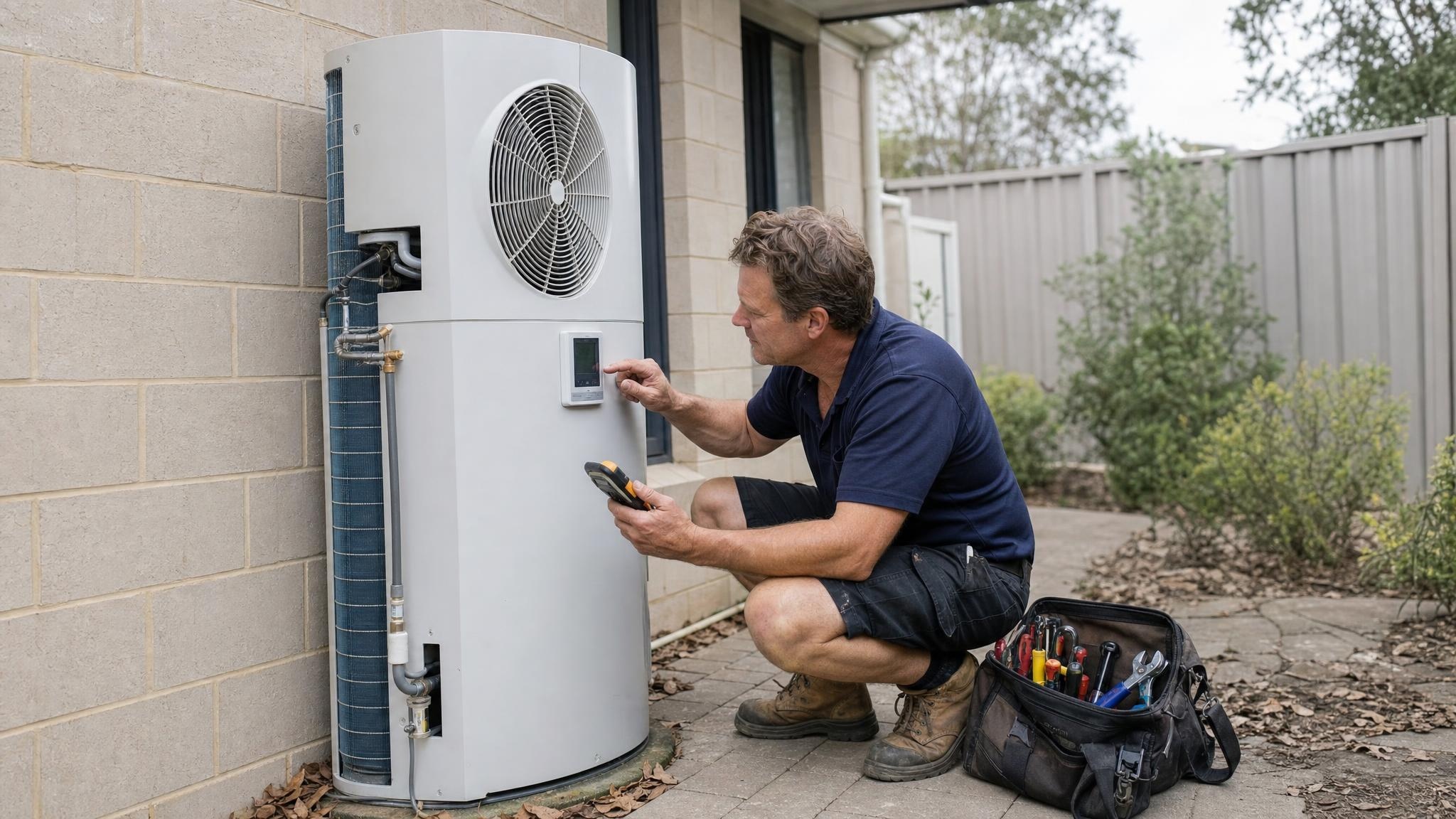
Common Causes of a Heat Pump Running Out of Hot Water
These are the causes we find most often on Perth callouts, roughly in the order they turn up.
A Failed Booster Element
Most heat pumps carry an internal electric element that helps out during high demand or very cold weather. When that heating element fails, the heat pump has to do all the work alone, and it cannot reheat the tank fast enough to keep up.
The result is exactly what people describe as 10 minutes of hot water. You get the stored hot water, then nothing behind it.
The tell is timing. A failed element shows up suddenly rather than gradually, while the rest of the system carries on as normal.
A Faulty Tempering Valve
The tempering valve mixes hot and cold water on the way out of the tank so the hot tap cannot scald anyone, which is what protects against serious burns.
Minerals in the water supply can cause the valve to stick in one position. It then injects too much cold water into the mix, and your shower turns lukewarm while there is still plenty of hot water in the tank.
Tempering valves are a wear item, generally due for replacement around every five years, and a faulty one is a common cause of hot water problems on an otherwise healthy system.
Slow Recovery in Cold Weather
A heat pump pulls its heat from the ambient air, so when the air is cold there is less heat available to draw on, while the cold water inlet feeds much colder mains water into the tank. Recovery slows down at precisely the point household demand goes up, which is why so many people notice the problem for the first time in winter.
If the system coped all summer and only struggles now, some of that is physics rather than a fault, although airflow and settings can usually claw back part of the difference.
Airflow, Shade and Installation Location
Dust, leaves, garden beds or a fence built too close to the unit all restrict airflow across the evaporator coils, and less air across the coils means less heat absorbed. A cramped, enclosed, shaded or poorly ventilated installation location does the same thing, except year-round rather than just in winter.
A low refrigerant charge causes similar symptoms by cutting heating capacity, though that one needs a technician rather than a broom.
If performance has been sliding for a while, the common signs your hot water heat pump needs servicing are worth a read.
High Flow Shower-Heads and High Household Demand
An older or high-flow shower head can draw 15 to 20 litres per minute, which empties the usable hot water supply from a smaller or partially heated hot water tank in under 10 minutes, no matter how well the system is working.
Two showers back to back will do the same, and so will a household that has quietly grown since the system was installed.
If this is your cause, a low-flow shower head is the cheapest fix on this list and often buys back several minutes.
Sediment, Dip Tubes and Ageing Systems
On older hot water systems, minerals crystallise and settle at the bottom of the water tank. That sediment build-up reduces usable capacity and slows heating, and the rumbling noise some tanks make is steam bubbles escaping through it.
A broken dip tube causes a different problem. The dip tube directs cold water to the bottom of the tank, and when it becomes brittle and snaps, cold water enters near the top and mixes straight into the hot line, giving you lukewarm water from the first minute.
Dip tube replacement is usually a modest job, often $250 to $400, and far more common on units nearing the end of their service life.
Our guide on how long heat pump hot water systems last is a useful sanity check if yours is getting on.
What You Can Check Before You Call Anyone
A few of these take five minutes and solve the problem outright.
Check the booster switch: Look at your switchboard for a breaker labelled “Water Heater” or “Booster” and make sure it has not tripped.
Check the controller or app: Many heat pump hot water systems have a manual Boost, High Demand or Hybrid mode worth switching on through winter or when guests are staying.
Check the timer: A system on a restricted schedule or off-peak timer may simply not be reheating when you need it.
Check the set temperature: If the target cylinder temperature is set too low, the tank holds less usable heat, so you run out sooner even when everything else is working properly.
Check the airflow: Clear dust, leaves and plants away from the fan and the side coils of the outdoor unit.
Check for leaks: A hot water leak quietly drains your supply and usually shows up as damp ground near the unit or a water bill that has crept up.
Anything involving wiring, refrigerant, or the tempering valve is licensed work, and a licensed plumber will diagnose a faulty element, a faulty thermostat or a stuck valve far faster than a weekend of guessing.
Does your Heat Pump Need a Check-Up? Contact Solar Repairs Today!
Ten minutes of hot water is a symptom, not a diagnosis. How the water runs out is what points you to the cause.
Work through the checks above first. A tripped booster, a timer or a blocked airflow path can all be sorted in an afternoon.
If the problem is a failed element, a stuck tempering valve or a refrigerant issue, that is licensed work and worth handing over rather than guessing at.
Get in touch with us today, and we’ll diagnose it properly, so you know whether you’re looking at a repair, a setting, or a system that has simply outgrown your household.
